Biomedical Engineering
The Department of Biomedical Engineering engages students in learning and research opportunities at the intersection of technology and the biomedical sciences, where medical knowledge and scientific information are translated into practical applications and medicines that help people to live longer and stay healthier.
Chemical & Materials Engineering
The Otto H. York Department of Chemical and Materials Engineering immerses students in experiential learning and cutting-edge research in areas as diverse as advanced materials, biotechnology, membrane science and technology, particle engineering, nanotechnology, polymers, and environmental technology.
Civil & Environmental Engineering
The Department of Civil and Environmental Engineering's mission is to educate a diverse student body to be employed in the engineering profession, to encourage research and scholarship among our faculty and students and to promote service to the engineering profession and society. Our program objectives are reflected in the achievements of our recent alumni.
Electrical & Computer Engineering
The Helen and John C. Hartmann Department of Electrical and Computer Engineering provides a student- centered, practice- oriented education with opportunities for research in an exceptionally wide range of fields, including signal and image processing, intelligent systems, power systems, renewable energy, nanoscale electronic and photonic devices and bio-systems.
Engineering Technology
The Department of Engineering Technology emphasizes both technical and management skills to prepare students for careers in industries ranging from construction management to advanced manufacturing, including product and process development, quality control, and network administration.
Mechanical & Industrial Engineering
The Department of Mechanical and Industrial Engineering offers a strong foundation in engineering theory that complements hands-on learning through laboratory courses and integrated design experiences, including the senior capstone class, which all make use of the latest computer-aided design tools.
SAVE THE DATE!!
MARINO XANTHOS MEMORIAL LECTURE 2026
Wednesday, October 14, 2026 2:30 PM
Central King Building (CKB) Room L-70 (Agile Strategy Lab)
Dr. Nader Engheta
H. Nedwill Ramsey Professor, School of Engineering and Applied Science
Dept. of Electrical and Systems Engineering
University of Pennsylvania
Lecture Title: TBD
About Marino Xanthos
Marino Xanthos, Ph.D. was a professor of Chemical, Biological and Pharmaceutical Engineering. Associate Provost for Graduate Studies, and Senior Technical Advisor to the Polymer Processing Institute (PPI) at NJIT Petroleum Institute. During the period of 1987 to 1995, he was the research director of the PPI and Stevens Research Professor. He was appointed professor of chemical engineering at NJIT in 1995, where he served until his passing as Director of the Polymer Engineering Center, Director of the Center of Processing of Plastics Packaging, Chairperson of the Executive Committee of the Materials Research Council, Senior Technical Adviser to the PPI at NJIT, and finally Associate Provost for Graduate Studies.
Dr. Xanthos was internationally recognized for his polymer blends, polymer composites and polymer foams expertise, and his studies on polymer modification through the use of functional particulate additives and reactive extrusion processes. He applied those to the processing of pharmaceutical oral dosage forms. He advised Ph.D. and master-level students and was also involved with PPI technical staff and industrial colleagues nationally and internationally.
Dr. Xanthos became a Fellow of the Society of Plastics Engineers (SPE) in 2003 and received the NJIT Board of Overseers Harlan J. Perlis Award that same year in recognition of his exemplary scholarship and outstanding research in the field of polymers. He served as the U.S. representative to the Board of the Polymer Processing Society since 2005. In 2010, he received the Heinz List Award in recognition of his outstanding achievements in reactive processing and devolatilization.
Dr. Xanthos deeply cared for and was a renowned mentor and advisor to his graduate and undergraduate students. For many years, he was the advisor and life force of the NJIT student chapter of the Society of Plastics Engineers (SPE).
This lecture series was established by his family, friends and colleagues to memorialize his accomplishments and love of his chosen field.
Previous Lectures
Frontiers in Supramolecular Design Materials
Fluid Mechanics Everywhere: Surprises, Beauty, Bifurcations and Similarity
Howard A. Stone
Neil A. Omenn '68 University Professor of Mechanical and Aerospace Engineering
Princeton University
Xanthos Memorial Lecture Program 2025
2D Carbides and Nitrides (MXenes) Are Ready to Roll
Frontiers in Supramolecular Design Materials
Interfacial Rheology: From Beer Foams to Material Design
Plastics - What Are They and Could We Live Without Them?
Liquid Crystals - From Simple Constructs to Autonomous Materials
Functional Polymer Materials Designed for Advanced Applications and Sustainability
Department of Chemistry, Chemical Engineering, and Materials Science & Engineering
Texas A&M University
Engineered Silk Proteins for Regenerative Medicine
David L. Kaplan, Ph.D.
Stern Family Endowed Professor of Engineering
Professor & Chair, Department of Biomedical Engineering
Distinguished University Professor
Tufts University
Director, NIH P41 Resource Center on Tissue Engineering
Editor-in-Chief, ACS Biomaterials Science and Engineering
Xanthos Memorial Lecture Program 2017
Breaking Moore's Law,
Thomas P. Russell, Ph.D.
Department of Polymer Science and Engineering, University of Massachusetts, Amherst and
Materials Sciences Division, Lawrence Berkeley National Laboratory, Berkeley, California
Xanthos Memorial Lecture Program 2016
The Unusual Rheology of Concentrated Suspensions
Morton M. Denn, Ph.D.
Benjamin Levich Institute, City College of New York
Xanthos Memorial Lecture Program 2015
28th Annual Salute to Engineering Excellence
April 16, 2026
Join us in congratulating this year's outstanding alumni, students, faculty and staff honorees:
Alumni Honorees
Rolando E. Acosta, Esq.
Student Honorees
Department of Mechanical and Industrial Engineering
Helen and John C. Hartmann Department of Electrical & Computer Engineering
Department of Mechanical & Industrial Engineering
School of Applied Engineering & Technology
Otto H. York Department of Chemical & Materials Engineering
Department of Biomedical Engineering
John A. Reif, Jr. Department of Civil & Environmental Engineering
Department of Mechanical & Industrial Engineering
Department of Mechanical & Industrial Engineering
John A. Reif, Jr. Department of Civil & Environmental Engineering
Dr. Charbel Abou-Khalil
John A. Reif, Jr. Department of Civil & Environmental Engineering
Faculty and Staff Honorees
School of Applied Engineering & Technology
Swapnil Moon
Department of Mechanical & Industrial Engineering
Faneza Hoossain-Ally
Department of Mechanical & Industrial Engineering
Lucas Dorazio
Otto H. York Department of Chemical & Materials Engineering
Prateek Shekhar
School of Applied Engineering & Technology
Helen and John C. Hartmann Department of Electrical & Computer Engineering
Alexandra Carreras
Campus Planning, Design & Construction
Questions? Please contact salute@njit.edu
Every Spring, NJIT's Newark College of Engineering (NCE) hosts its annual gala reception and networking event for over 150 people that will celebrate and recognize outstanding members of the NCE Family.
The goal is to support efforts to educate, research, improve and expand programs for students. All proceeds of this event go toward the NCE Board of Visitors Endowed Scholarship and Dean's Fund.
NCE is one of the oldest and largest professional engineering schools in the United States and offers 18 undergraduate degree programs, 20 master's and 10 doctoral degree programs. NCE has recently introduced 5 new master's MS programs responding to the needs of the industry and the students. Undergraduate enrollment is more than 4,500 and more than 2,500 are enrolled in graduate studies. The 144-member faculty includes engineers and scholars who are widely recognized in their fields.
Friday, December 11, 2026
9:00 AM–2:00 PM
New Jersey Institute of Technology | Newark, NJ
Engineering Career Day invites high school freshmen and sophomores to discover the exciting world of engineering through an engaging, hands-on experience at NJIT.
What Students Will Experience
Hands-On Engineering Activities – Explore engineering concepts through interactive, hands-on experiences.
Engineering Lab Tours – Get an inside look at NJIT's engineering facilities and discover how engineering is applied in real-world settings.
Meet Engineers and Students – Engage in meaningful conversations with NJIT students and faculty about engineering education and careers.
Explore Engineering Pathways – Learn about the diverse fields and career opportunities available to engineers.
Imagine Your Future – Connect your interests and strengths to possibilities in engineering.
Who Should Attend?
High School Freshmen and Sophomore Students
Engineering Career Day is designed specifically for students who are beginning to explore college and career possibilities and want to learn more about engineering.
Important Registration Information
Students must attend Engineering Career Day as part of a registered high school group and must be accompanied by a high school teacher, counselor, or designated chaperone.
High schools are responsible for providing appropriate representatives to accompany and supervise their students throughout the event.
Space Is Limited
High schools must register in advance to participate. Registration will close once the event reaches capacity.
Registration Deadline: October 1, 2026
Register Your High School
Register Here
Co-op is a 4-6-month, full-time, paid educational experience (4 months part-time or full-time for SAET students). Students alternate between periods of academic study at the university and periods of full-time co-op employment in industry. The employment assignments (usually six months in duration) are related to the student’s academic and career interests. The combination of academic and industrial experiences provides better understanding of the engineering workplace and helps with career development.
What's the difference between a co-op and an internship?Both co-ops and internships are excellent professional learning experiences. Internships are usually part-time experiences which take place around your academic schedule, although they may be full-time over the summer. A co-op is a full-time experience for six months. Internships tend to focus on short-term projects, whereas co-ops are essentially on-the-job training. Internships do not typically offer credit, and do not typically require faculty approval, whereas the NCE undergraduate co-op program could offer educational credit and requires faculty approval.
Can taking part in the Co-op program delay my graduation?The co-op program comprises of up to two full-time, 4-6-month work experiences, which could add one additional semester/year to your academic experience. Six months is the optimum amount of time a student can spend at a company while getting the best learning experience, and participating in two co-op experiences significantly increases the average graduate starting salary, and career confidence. Moreover, many students will receive a job offer along with their second co-op experience, leading to employment well before graduation.
What qualifies as a Co-op role?For a work experience to be registered as a co-op work term with NJIT Newark College of Engineering, the position should fulfill the following qualifications:
Number of hours per week:
- NCE Undergraduate programs: (full-time) 35 to 40 hours per week
- SAET Undergraduate programs: (full-time) 35 to 40 hours per week or (part-time) 15 to 25 hours per week
Length: at least 15 weeks and within the academic term (e.g., Jan-Apr; May-Aug; Sep-Dec)
- NCE Undergraduate programs: 4-6 months
- SAET Undergraduate programs: 4 months
Salary: minimum wage or above (for the standards of the geographic area where the student is working)
- The average salary for NJIT Engineering students varies based on the student’s academic program and prior work experience; the general average is $20/hr.
Supervision: Co-op student supervised by an engineer or other technical staff who provides regular supervision, feedback, and completes the Final Evaluation.
Relevant to Engineering: Technical and relevant to student’s academic program and/or career objectives
Please click here to view employment policies for international students.
What's the average pay rate for a co-op?Hourly pay for co-ops ranges between $18 and $22 an hour, although some positions pay more.
Will I be charged tuition while participating in a co-op?The co-op standard courses ENGR310 and ENGR410 are designed only to help students maintain full-time status during co-op experiences and will not count towards in-major credits. You will not be charged tuition for these Co-op courses. You will however be charged any additional classes you take while doing a Co-op.
Course credits: 3 credits (usually taken as elective). Co-op may be able to replace required elective course. The Co-op course code is based on the SAET program student is in, and can be found in the academic catalog, and you will be charged tuition and fees for the Co-op course since it will be providing you with credit towards your degree.
Do I get charged any additional fees while participating in a co-op?You will be charged university-use fees. Click here to see current university-use fee rates.
Food plan and housing fees
Please note that participating in a co-op will not automatically waive your food and housing plans. If you wish to waive those plans, follow these steps at least one month prior to the start of the co-op semester.
Waive housing. You must express your desire to waive housing for the co-op semester in writing to the Office of Residence Life at reslife@njit.edu, copying the Director of Residence Life (see the staff here).
Waive the food plan. You may request a change to your meal plan by clicking here.
Can I take extra classes while doing Co-op? And if so, do I have to pay tuition for those classes?Domestic students
- With the approval of the department co-op advisor, and in consultation with the academic advisor, a student on co-op assignment can take up to two courses while doing a full-time Co-op position during the relevant fall or spring semesters, and one additional course during the summer.
Students in School of Applied Engineering programs doing part-time positions for Co-op (about 15-20 hours a week) can take up to 4 courses (or 12 credits) in addition to their Co-op course.
International students
- International students have different requirements. Please click here to view employment policies for international students. For more information about international requirements, contact contact Nayelli Perez - Director, Undergraduate Engineering Co-op at nayelli.perez@njit.edu
Paying for additional credits
- If you plan to take additional classes, you do need to pay for the credit hours. Please click here to see the current rates on the University Catalog page.
Your scholarship will likely pause during the semester of your co-op and return the following semester. Click here to schedule an appointment with your financial aid counselor to learn more.
Who are all the advisors and staff that I will work with in my co-op?There are several points of contact to support you in finding and participating in a co-op. The most important to know are:
- Your faculty advisor and/or academic advisor will connect with you throughout your academic career to ensure that your courses are in line with your goals.
- Your faculty co-op advisor will specifically advise you on co-op questions, and will serve as your professor for the co-op course in which you will enroll during your co-op.
- Your Career Services - Career Advisor will help you find a co-op position and can assist you in preparation for interviews and participation.
Since the state of New Jersey caps the number of credits that a student can take within certain engineering fields, your course structure is critical. To that end, ENGR 211 is a 1-credit course general engineering course. It provides engineering students with multidisciplinary and career planning skills in a seminar environment with emphasis on career planning, resume writing, and interview skills. This course was structured so that you will not exceed the state's credit cap, while still giving you some academic credit for your hard work.
Does the co-op experience credit count towards my degree?The co-op standard courses ENGR310 and ENGR410 are designed only to help students maintain full-time status during co-op experiences and will not count towards in-major credits. Instead, your academic career could extend for additional semesters to accommodate the time spent on co-op.
Course credits: 3 credits (usually taken as elective). Co-op may be able to replace required elective course. The Co-op course code is based on the SAET program student is in, and can be found in the academic catalog.
What happens if I don’t get a co-op offer?NJIT has many co-op jobs available to students. The Career Advisor will work closely with each student to help him or her secure a suitable position. However, in rare cases, due to market conditions, economic circumstances or other factors, a student may not get a co-op job in each semester. In that case, and depending on their field of study and program, the student may return to classes and begin the process of applying for co-op jobs for the subsequent semester.
What happens if I don't like the co-op, or I need to drop out?While we strongly advise against dropping out of a co-op, we understand that circumstances sometimes require it. Due to the academic nature of the program, and the fact that your co-op participation is what waives your tuition fees and/or provides you with a grade for your Co-op course, you will need to immediately re-enroll in courses (if you are not past the re-enroll dates). Students that are considering dropping their Co-op course and Co-op position, should contact Nayelli Perez - Director, Undergraduate Engineering Co-op at nayelli.perez@njit.edu before making that decision.
What happens when I'm done with my co-op?At the conclusion of your co-op, you complete a final assignment about your experience to your faculty co-op advisor (usually a report and/or presentation). Different faculty have different preferences for how you present your work and learning experiences, but all of them will require you to demonstrate the specific items you've learned in the co-op, and how they pertain to your field of study.
If you have any questions about the NCE Co-op program, you are welcome to contact Nayelli Perez - Director, Undergraduate Engineering Co-op at nayelli.perez@njit.edu. Students who want to go over their Co-op job search can make an appointment with their career advisor in Handshake, and can find their career advisor at this link.
The Newark College of Engineering at NJIT is a Carnegie-classified R1 research institution and a leading source of diverse, industry-ready engineering talent in the NYC Metro region.
Our Engineering Co-op Program connects employers with motivated students who are:
- Available year-round through flexible four to eight-month work terms
- Prepared through structured orientation and reflection
- Supported and monitored by NJIT throughout their work experience
- Academically aligned to ensure relevance, accountability, and impact
Through our Engineering Co-op and ELEVATE Partner Programs, employers gain priority access to motivated students available year-round, customized recruitment support, and high-visibility engagement opportunities that strengthen your employer brand. Our partnerships go beyond hiring—helping organizations build sustainable talent pipelines, increase workforce development, and inclusive excellence, and connect meaningfully with the next generation of engineers.
Posting Calendar for positions
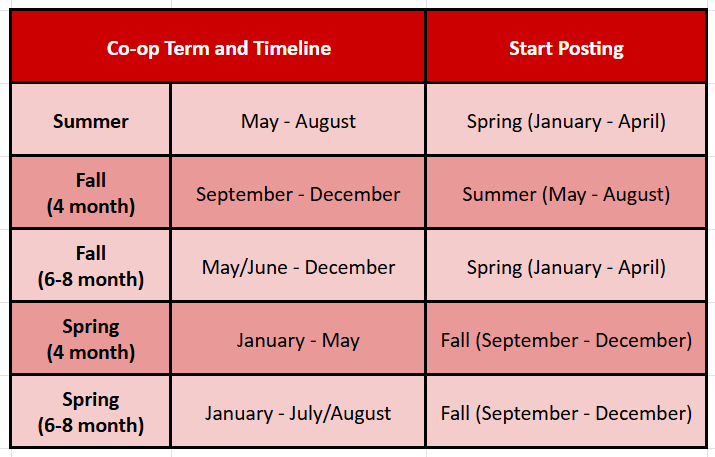
The NCE Undergraduate Co-op program does not do rank/match and we do not follow a strict schedule for Co-op recruitment. However, we recommend that employers conduct their Co-op recruitment the semester prior to when they expect to have their Co-op student start at their organization.
You can view the recommended timelines for Co-op Recruitment and Key Dates below to plan when to post, interview, present offers to and schedule position start/end dates for NJIT Engineering Co-op candidates.
If you are an employer and have any questions about Co-op recruitment at NJIT, you are welcome to contact Nayelli Perez (she, her) - Director, Undergraduate Engineering Co-op - Newark College of Engineering & Career Services at nayelli.perez@njit.edu. Appointments to discuss recruitment strategy can be scheduled at this link.
Key recruitment dates for Summer 2026 start and Fall 2026 start Co-op roles
- Student Co-op Decision Deadlines: June 9, 2026 (Summer) and September 15, 2026 (Summer–Fall)
- Start and end dates can be flexible for domestic students as long as they do not conflict with their class schedule AND allows them to have at least a 12 to 15 week Co-op; F-1 students must adhere to start and end dates that align with the start and end of the semester(s) in which they do a Co-op role
- Recommended Start Date (4 month Summer start Co-op position): May 18, 2026
- Recommended Start Date (6-8 month Summer start Co-op position [May-December]): May 18, 2026
- Recommended Start Date (4 month Fall start Co-op position): Sept 1, 2026
- Recommended End Date (4 month Summer start Co-op position): August 31, 2026
- Recommended End Date (6-8 month Summer start Co-op position [May-December]): December 22, 2026 (student could work all the way up to the day before start of next semester (January 18, 2027)
- Recommended End Date (4 month Fall start Co-op position: December 22, 2026 (student could work all the way up to the day before start of next semester (January 18, 2027)
Key recruitment dates for Spring 2027 start Co-op roles
- Student Co-op Decision Deadline: January 25, 2027
- Recommended Start Date: January 19, 2027; The start date can be earlier for domestic students (as long as it does not overlap with the prior Fall semester)
- Recommended End Date (4 month Co-op position): May 12, 2027
- Recommended End Date (6-8 month Co-op position): August 31, 2027
For questions on key dates you can contact Nayelli Perez (she, her) - Director, Undergraduate Engineering Co-op - Newark College of Engineering & Career Services at nayelli.perez@njit.edu.
For a work experience to be registered as a co-op work term with NJIT Newark College of Engineering, the position should fulfill the following qualifications:
Number of hours per week:
- NCE Undergraduate programs: (full-time) 35 to 40 hours per week
- SAET Undergraduate programs: (full-time) 35 to 40 hours per week or (part-time) 15 to 25 hours per week
Length: at least 15 weeks and within the academic term (e.g., Jan-Apr; May-Aug; Sep-Dec)
- NCE Undergraduate programs: 4-6 months
- SAET Undergraduate programs: 4 months
Salary: minimum wage or above (for the standards of the geographic area where the student is working)
- The average salary for NJIT Engineering students varies based on the student’s academic program and prior work experience; the general average is $20/hr.
- If you are an employer and have any questions about average salary, you are welcome to contact Nayelli Perez (she, her) - Director, Undergraduate Engineering Co-op - Newark College of Engineering & Career Services at nayelli.perez@njit.edu. Appointments to discuss recruitment strategy can be scheduled at this link.
Supervision: Co-op student supervised by an engineer or other technical staff who provides regular supervision, feedback, and completes the Final Evaluation.
Relevant to Engineering: Technical and relevant to student’s academic program and/or career objectives
Please click here to view employment policies for international students.
All new Handshake employer accounts will be verified prior to account approval.
Follow the steps below to get started with Handshake (our career management system) and/or create a new job posting:
Getting Started With Handshake: Employers
Confirming Your Job is Posted Successfully
Download Applications / Create a Resume Book
Additional features for Handshake Premium users
Handshake Premium accounts have a Greenhouse integration available!
- If you have an external ATS, please choose this option. A text field will load below the Job Title where you should enter the ATS information:
- Make sure to enter "for NJIT" to ensure that our students receive a direct notation of your posting
- When you click on "+ add an ATS/job code", the fields will load for the optional System Code and required URL:
Interested in marketing your job to specific subsets of students? Premium partners have access to create Segments (to identify students) and send Campaigns to those students! See it in action in Video: Segments & Campaigns!
Please note: In order for a NJIT Engineering Co-op student to get a position approved for Co-op, they need the provide the following information: position title, Supervisor's name and contact information (email address and/or phone number), Start date and end date of the position, job description of the position’s tasks/responsibilities (must relate to student’s major and/or career objectives), number of hours student will be working per week (40 hours full-time maximum), Salary
It is recommended, if possible, for this information to be provided in the offer letter to prevent potential delays in the student getting the position approved for Co-op.
[Your Company Letterhead]
[Date]
[Candidate's Name] [Candidate's Address] [City, State, ZIP Code]
Dear [Candidate's Name],
We are pleased to offer you a Co-op position with [Your Company Name], starting on [Start Date] and concluding on [End Date]. We were impressed by your qualifications and are excited to welcome you to our team.
Position: [Position Title]
Salary: [Salary per hour]
Working Hours: You will be expected to work [Number of Hours] hours per week during the Co-op term.
Location: [Provide the physical location of the workplace, if applicable.]
Reporting to: You will report to [Supervisor's Name], who will provide guidance and support during your Co-op term.
Job Description:
[Include a brief description of the role, responsibilities, and any other relevant information about the position.]
Key Responsibilities:
[List the key responsibilities and tasks the candidate will be expected to perform during their Co-op term.]
Qualifications:
[List the specific qualifications and skills required for the position.]
Benefits [if applicable]:
In addition to the hourly rate, you will be eligible for the following benefits during your Co-op term:
[List any additional benefits, such as access to company facilities, training opportunities, etc.]
Please indicate your acceptance of this offer by signing and returning a copy of this letter by [Acceptance Deadline]. If you have any questions or require further clarification about the offer, please feel free to contact us.
We look forward to your contributions to our team and are confident that your time with us will be mutually beneficial. Thank you for choosing [Your Company Name] for this Co-op opportunity.
Sincerely,
[Your Name] [Your Title] [Your Contact Information]
[Signature (if sending a printed copy)]
[Enclosures: Employee Handbook, Any Other Relevant Documents]
If a verbal offer is given to the Co-op student, please follow up with an offer in writing, as the Co-op student will need to submit that to get the position approved for Co-op.
We strongly encourage employers to inform the NCE Co-op Staff of any Co-op job offers you would like to extend to students; this ensures that we at Newark College of Engineering /NJIT provide you (the employer) and the student with the support needed, that the student is able to have their Co-op position counted for their Co-op course, and that full-time Co-op hires are granted the authorization by Newark College of Engineering /NJIT to work full-time and maintain full-time student status.
Provide the student with a supervisor and/or mentor to support them in the workplace and to be an active participant in the cooperative education model
We encourage you to discuss the student(s) Learning Objectives at the beginning of the Co-op work term.
Complete a Final Evaluation at the end of the Co-op work term (which will be sent via email through Handshake); an optional Mid Term Check-In may be sent to the employer and student during the middle of Co-op work term in case either the employer/supervisor or student would like to provide feedback or request extra support from the NCE Co-op staff.
(if applicable) Contact the NCE Co-op staff prior to taking disciplinary action or considering the dismissal of a co-op student.
Please click here to view employment policies for international students
Please contact Nayelli Perez, Director - Undergraduate Engineering Co-op at nayelli.perez@njit.edu or 973-642-7154 to inquire further about the NCE Co-op ELEVATE Partnership Program if you would like to learn more about the upcoming ways to engage with NJIT's Engineering students such as:
- class speaking opportunities in our Professionals Skills in Engineering course
- upcoming networking nights
An overview of employer engagement opportunities at NJIT can be found at this link

ELEVATE Your Talent Partnership with Newark College of Engineering
Become an ELEVATE Partner and gain priority access to NJIT’s diverse, highly motivated engineering students through our Undergraduate Engineering Co-op Program. Designed for employers seeking more than one-off hiring, the ELEVATE Partnership supports sustained, high-impact engagement and talent pipeline development by connecting your teams with co-op students who bring current technical skills, fresh perspectives, and strong academic preparation.
Why Partner with NCE Through ELEVATE?
ELEVATE partners receive customized recruitment support and priority engagement opportunities that maximize visibility and connection with engineering talent.
What you Get?
Be recognized in event signage and communications at two annual Engineering Co-op networking events.
Invitation to two dedicated Co-op recruitment events (one per semester) exclusively for NCE undergraduate engineering students.
Secure the best dates and times for interviews and employer information sessions during each Co-op cycle (Fall & Spring), ensuring strong student turnout and engagement.
Your open roles featured in four career newsletters, plus targeted outreach to specific student populations based on your hiring needs.
Meet with our Employer Relations team to build a customized recruitment and engagement plan—covering timelines, messaging, events, and hiring milestones.
Get assistance setting up your roles in Handshake so the right students see your opportunities at the right time.
Introductions to relevant faculty, administrators, and leaders of NJIT’s 100+ student organizations to deepen your campus presence.
What We Ask of ELEVATE Partners
- $1,500 annual partnership fee
- Posting a minimum of two (2) Undergraduate Engineering Co-op positions per cycle
(Four (4) total per year) - Participation in two (2) Co-op recruitment events annually
Please contact Nayelli Perez, Director - Undergraduate Engineering Co-op at nayelli.perez@njit.edu or 973-642-7154 to inquire further about the NCE Co-op ELEVATE Partnership Program.
Co-op students can alternate between full-time study semesters and Co-op semesters in which they would be working full-time. Below are two of the possible co-op sequences that a NCE student could follow.
* SAET students that do a part-time Co-op, do not need to follow a Co-op sequence and can take the Co-op course as an elective with their other coursework for the semester they do the Co-op position in.
Other Co-op sequences are possible and a student can discuss by contacting Nayelli Perez - Director, Undergraduate Engineering Co-op at nayelli.perez@njit.edu. Students who want to go over their Co-op job search can make an appointment with their career advisor in Handshake, and can find their career advisor at this link.
|
|
Option A |
Option B |
|
| First Year |
Fall |
Regular schedule |
Regular schedule |
|
Spring |
Regular schedule |
Regular schedule |
|
|
Summer |
-- |
-- |
|
| Second Year |
Fall |
Enrolled in ENGR 211 |
Regular schedule |
|
Spring |
Regular schedule |
Enrolled in ENGR 211 |
|
|
Summer |
Co-op I (enrolled in ENGR310) |
-- |
|
| Third Year |
Fall |
Co-op I (enrolled in ENGR 310) |
Regular schedule |
|
Spring |
Regular schedule |
Co-op I (enrolled in ENGR 310) |
|
|
Summer |
Co-op II (enrolled in ENGR 410) |
Co-op I (enrolled in ENGR310) |
|
| Fourth Year |
Fall |
Co-op II (enrolled in ENGR 410) |
Regular schedule |
|
Spring |
Regular schedule |
Co-op II (enrolled in ENGR 410) |
|
|
Summer |
-- |
Co-op II (enrolled in ENGR410) |
|
| Fifth Year |
Fall |
Regular schedule |
Regular schedule |
|
Spring |
Regular schedule |
Regular schedule |
Eligibility Requirements
Eligibility for your first co-op experience
- You must have completed 60 credits. Students that have completed at least 45 credits can start to apply for a Co-op role that would take place in the following semester.
- You must have a GPA of 2.5 or above. You must have maintained a GPA of 2.5 at the time you submit your Co-op offer for Co-op approval. Transfer students must have attended NJIT for at least one full semester - to have a NJIT GPA.
- You must have taken a Co-op Prep course (ENGR 211). You can see when ENGR 211 will be offered next at this link. If you have not taken ENGR 211 by the time you get your Co-op job offer, you may need to take ENGR 211 in the following semester when you do your Co-op position. If you are not able to do ENGR 211 before or while in your Co-op work term, please let your career advisor know.
- Your CDS advisor or NCE Co-op Director must determine that you are "co-op approved" so that you have access to the Experiences tab in Handshake. If you believe you meet the Co-op eligibility requirements and have not received messaging from Career Development Services or the NCE Co-op Director that you are Co-op approved, contact Nayelli Perez (she, her) - Director, Undergraduate Engineering Co-op at nayelli.perez@njit.edu or find your career advisor to contact at this link.
Transfer students must have attended NJIT for at least one full semester - to have a NJIT GPA.
International students have additional eligibility requirements, which you can find at the Office of Global Initiatives website. F-1 NCE Undergraduate students interested in doing Co-op, should contact Nayelli Perez (she, her) - Director, Undergraduate Engineering Co-op - Newark College of Engineering & Career Services at nayelli.perez@njit.edu to discuss their Co-op options.
Eligibility for your second co-op experience
You must have added 9 additional credits (usually one semester's worth) after your first co-op, and continued to maintain a minimum GPA of 2.5 to apply for your second co-op.
About ENGR 211
Students must complete ENGR 211, Professional Skills for Engineers I, as a prerequisite (or in some cases co-requisite) to participating in a co-op. ENGR 211 is a 1-credit course general engineering course. It provides engineering students with multidisciplinary and career planning skills in a seminar environment with emphasis on career planning, resume writing, and interview skills.
The School of Applied Engineering and Technology (which exists under the umbrella of Newark College of Engineering) has different requirements and schedules for students than other departments.
- Maintain a minimum of 2.2 GPA.
- You must have completed 60 credits. Students that have completed at least 45 credits can start to apply for a Co-op role that would take place in the following semester.
- Transfer students must have attended NJIT for at least one full semester - to have a NJIT GPA.
- The Co-op course is 3 credits. The Co-op course may be able to replace an elective course.
- SAET students (depending on their program) can do up to 1 or 2 Co-op experiences.
Periodically, you will receive notice of your Co-op eligibility by the NCE Co-op Director and the invitation to take part in the Co-op program if you choose.
Those that have been determined as Co-op eligible will be able to see a public label at the bottom of their Handshake profile that notes for which semester they are Co-op eligible. Example listed below:
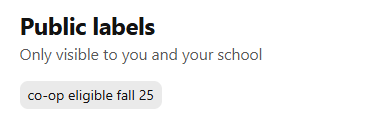
If you believe you meet the Co-op eligibility requirements (or need a quick answer on this due to an impending Co-op offer) and have not received messaging that you are Co-op approved, contact Nayelli Perez - Director, Undergraduate Engineering Co-op at nayelli.perez@njit.edu or find your career advisor to contact at this link.
Important Dates - Summer/Fall 2026 Co-op approval
It is best for students to submit their Experience at least 10 business days prior to their anticipated start date to allow enough time for Experience Form processing. Dates are subject to change.
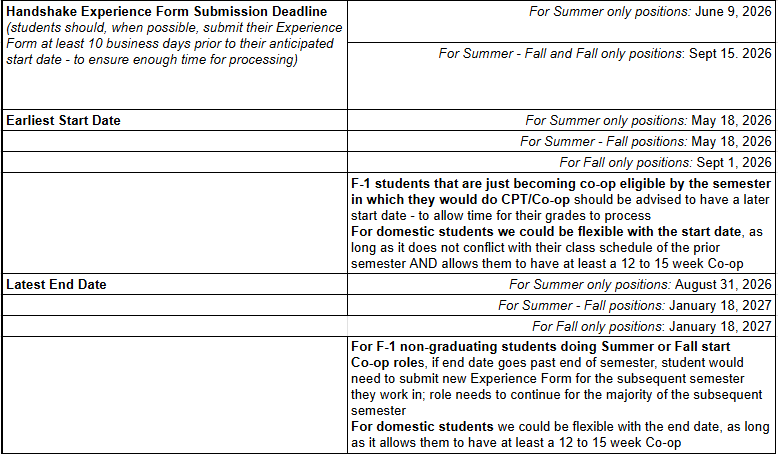
F-1 students can refer to the Academic Calendar and CPT webpage for more information.
The NCE Undergraduate Co-op Program allows you to get up to one year of paid work experience, while staying enrolled full-time. Engineering students get the opportunity to alternate between semesters of full-time work and full-time study in areas related to the student's academic major and career interests. Upon graduation, these Co-op students will have built a professional network, and typically receive higher starting salaries than their counterparts from other schools.
Read what our students and employers have to share about the Engineering Co-op program:
Leo Loiacono, Vice President, Business & Product Development - Valcor Engineering Corporation “NJIT Co-op students learn on the job and get to experience the type of work they would do if they were to join our organization. They get to learn about the work environment, which is very beneficial to their careers. We also get a chance to see their capabilities and their work habits, to determine if there is a potential long-term fit for employment at our company.” |  |
Testimonials
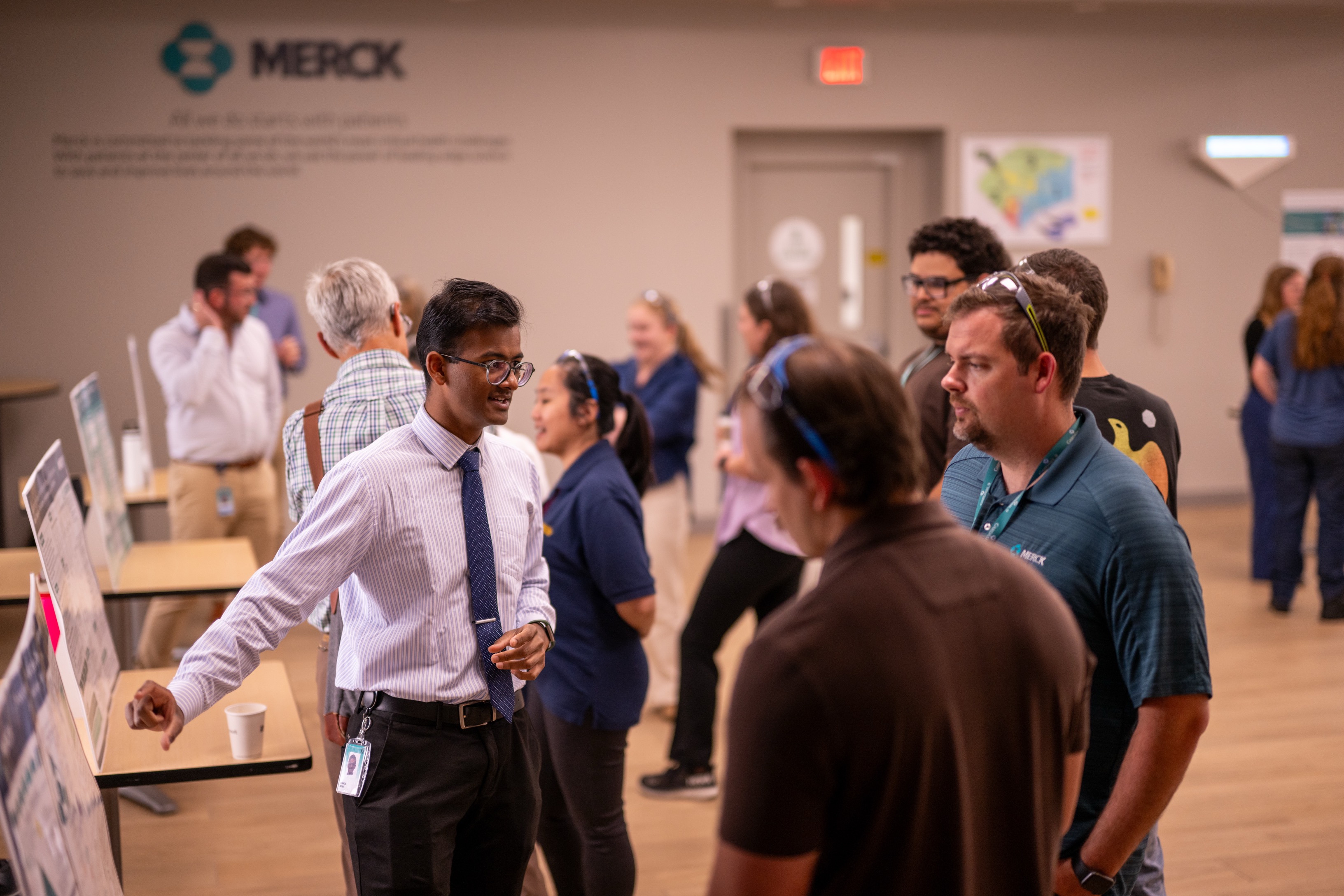 | Anmol Doss | Mechanical Engineering - Merck “The Co-op is worth it. Everything from the application process, to the work itself, to the independence and accountability of corporate life teaches you so much. I gained a lot of valuable work experience, and even in applying to a PhD I have been commended for my industry experience - showing that professional experience matters even in academia. Having work experience in college is extremely important to securing a job in the future, and co-ops give students an in-depth look into career life early on and an opportunity to contribute to a company that makes them much more likely to hire you.” |
Iniobong Ofonime | Mechanical Engineering - PSEG “From my co-op experience, I gained technical skills as well as soft skills. I built my skills in communication, leadership, and organization. I also developed my technical knowhow in the area of power transmission, sub-transmission, and distribution. I learnt various industry terms used in the power industry and explored the various aspects involved in keeping people's lights on 24/7.” |  |
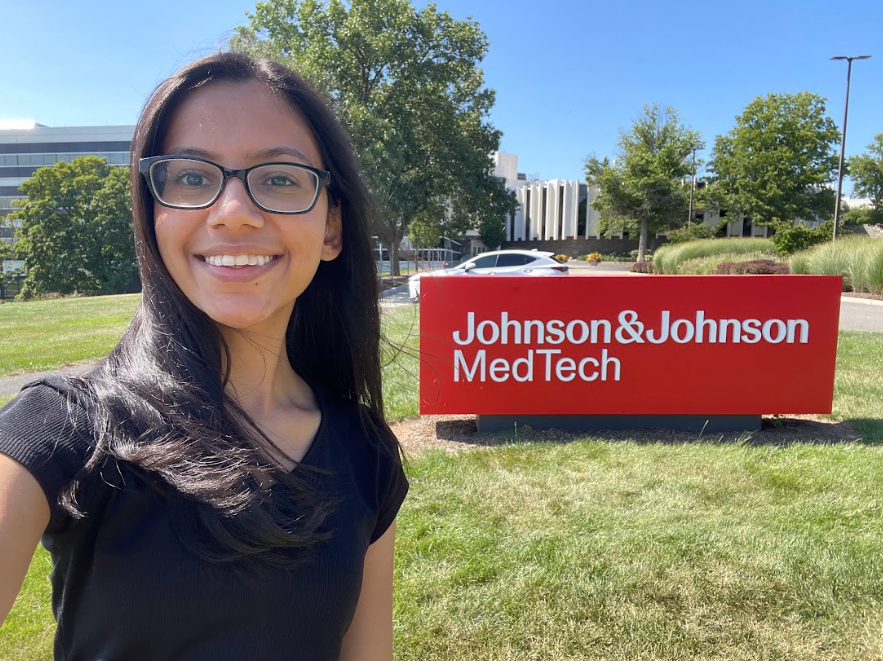 | Priyanshi Luhar | Biomedical Engineering - Johnson & Johnson “My co-op helped me use some of my biomaterial characterization skills and helped translate it into applying it to the suture development process. I was also able to conduct my own project and gain my Yellow Belt Six Sigma Certification. I was also heavily involved as the VP of the Raritan Intern and Co-op Association which helped my networking and professional development.” |
| Ravidu Wijesundara | Mechanical Engineering - BMW “This co-op has transformed the way I apply what I have learned at NJIT. Working on real production challenges such as reducing rework, minimizing downtime, and implementing corrective actions helped me connect classroom concepts to real industrial applications. Professionally, I gained a deeper understanding of manufacturing systems, quality standards, and continuous improvement methods. Leading investigations and presenting data to the management team improved my confidence, accountability, and communication skills. Overall, this experience has clarified my career path in the automotive field and strengthened my ability to contribute meaningfully to large-scale engineering operations.” |  |
| Talal Hindi, Engineering Manager - Vitaquest International
"NJIT Co-op students have significantly contributed to our company. They have worked in various roles, including equipment testing and problem solving, and applied classroom knowledge in practical settings."
|
Mark R. Taylor, President - Airborne Labs International
“An NJIT Co-op student joined ALI as an Engineering Technician, bringing his knowledge in Mechanical Engineering Technology to support the production team. He has contributed to the development of analyzer systems by reviewing and interpreting engineering blueprints and creating detailed part and process drawings using CAD software. He has assisted in testing equipment under various operational conditions and analyzing test data to improve product reliability, safety, and performance. He became a resourceful team member, providing technical support to assemblers and sharing his expertise across departments.”
|  |
 | Chloe Sippin, Organizational Development Coordinator - MAPEI “When NJIT interns join MAPEI, they don’t just observe—they become active contributors to meaningful projects. From day one, they show an impressive ability to adapt, learn quickly, and collaborate effectively with our teams. Their technical skills and fresh perspectives have helped us streamline processes, solve challenges creatively, and deliver results that align with our commitment to innovation and quality.” |

Office of the Dean Administration
Tchouassi, Lucie
Associate Dean for Academics NCE
View ProfileBrateris, Daniel
NCE Exec Dir Experiential Lear
View ProfileVega-Irvin, Angela
Director of Administration
View ProfileKochy, Leanne
Executive Director of Development, Newark College of Engineering
View ProfileMcCarthy, John
Dir Resh Development, NCE
View ProfileThornton, Patrick
Director of Robotics
View ProfileDrwiega, Tom
Associate Director, Health & Safety
View ProfileHernandez, Miosotis
Asst Dir First Year Engr Prgms
View ProfileMilne, Priscilla
Business Manager
View ProfileYanez, Carolina
NCE Coord Infrastructure
View ProfileSkipper, Arminta
Administrative Coordinator
View ProfileOnque, Imani
Administrative Assistant II
View ProfileMakerspace
Brateris, Daniel
NCE Exec Dir Experiential Lear
View ProfileOlmeda, Adrian
Makerspace Manager
View ProfileSosa, Danny
Makerspace Design & Manufacturing Specialist
View ProfileAck, Jason
Makerspace Design & Manufacturing Specialist
View ProfileRestrepo, Gloria
Administrative Coordinator Makerspace
View ProfileDepartment Chairs
Distinguished Professors
Alvarez, Tara
Distinguished Professor
View ProfileAnsari, Nirwan
Distinguished Professor
View ProfileArmenante, Piero
Distinguished Professor
View ProfileBiswal, Bharat
Distinguished Professor
View ProfileBoufadel, Michel
Distinguished Professor
View ProfileDave, Rajesh
Distinguished Professor
View ProfileDhawan, Atam
Chief Strategic Innovation Officer
View ProfileDreyzin, Edward
Distinguished Professor
View ProfileFriedland, Bernard
View ProfileHaimovich, Alexander
View ProfileKam, Moshe
Interim Provost and Executive Vice President of Academic Affairs
View ProfileMeegoda, Jay
Distinguished Professor
View ProfileSaigal, Sunil
Distinguished Professor
View ProfileSavir, Jacob
Distinguished Professor
View ProfileSirkar, Kamalesh
Distinguished Professor
View ProfileTsybeskov, Leonid
Distinguished Professor
View ProfileZhou, Mengchu
Distinguished Professor
View ProfileProfessors
Abdel-Malek, Layek
Professor
View ProfileAbdi, Ali
Professor
View ProfileAdamovich, Sergei
Professor
View ProfileAkansu, Ali
Professor
View ProfileAtre, Sundar
Chair
View ProfileAxe, Lisa
Chair
View ProfileBaltzis, Basil
Professor
View ProfileCarpinelli, John
Professor
View ProfileChester, Shawn
Professor
View ProfileChien, I Jy
Professor
View ProfileDaniel, Janice
Professor
View ProfileDas, Sanchoy
Professor
View ProfileFischer, Ian
Professor
View ProfileGor, Gennady
Professor
View ProfileGrebel, Haim
Professor
View ProfileHou, Edwin
Professor
View ProfileJi, Zhiming
Professor
View ProfileKam, Moshe
Interim Provost and Executive Vice President of Academic Affairs
View ProfileKhreishah, Abdallah
Professor
View ProfileKhusid, Boris
Professor
View ProfileKliewer, Joerg
Professor
View ProfileKo, Dong
Professor
View ProfileLee, Eon Soo
Professor
View ProfileLi, Xiaobo
Professor
View ProfileLiu, Xuan
Professor
View ProfileMisra, Durgamadhab
Chair
View ProfileNarh, Kwabena
Professor
View ProfilePfister, Bryan
Chair
View ProfileRanky, Paul
Professor
View ProfileRao, I.
Professor
View ProfileRojas-Cessa, Roberto
Professor
View ProfileSaadeghvaziri, Mohamad
Professor
View ProfileSahin, Mesut
Professor
View ProfileSebastian, Donald
Professor
View ProfileSingh, Pushpendra
Professor
View ProfileSodhi, Rajpal
Professor
View ProfileSosnowski, Marek
View ProfileSpasovic, Lazar
Professor
View ProfileVenerus, David
Professor
View ProfileWang, Xianqin
Professor
View ProfileWecharatana, Methi
Professor
View ProfileZhang, Wen
Professor
View ProfileAssociate Professors
Abdou, George
Associate Professor
View ProfileAbichandani, Pramod
Associate Professor
View ProfileAdams, Matthew
Associate Professor
View ProfileAhmadpoor, Fatemeh
Associate Professor
View ProfileAzizi, Mohsen
Associate Professor
View ProfileBandelt, Matthew
Acting Dean, Newark College of Engineering
View ProfileBasuray, Sagnik
Associate Professor
View ProfileBengu, G.
Associate Professor
View ProfileBorgaonkar, Ashish
Associate Professor
View ProfileCai, Wenbo
Associate Professor
View ProfileDatta, Dibakar
Associate Professor
View ProfileDimitrijevic, Branislav
Associate Professor
View ProfileDing, Yuan
Associate Professor
View ProfileFarokhirad, Samaneh
Associate Professor
View ProfileGe, Hongya
Associate Professor
View ProfileHan, Tao
Associate Professor
View ProfileHubbi, Walid
Associate Professor
View ProfileJin, Huiran
Associate Professor
View ProfileKaraa, Fadi
Associate Professor
View ProfileKou, Zhifeng
Associate Chair
View ProfileLee, Eunjung
Associate Professor
View ProfileLee, Joyoung
Associate Professor
View ProfileLiu, Qing
Associate Professor
View ProfileMahgoub, Mohamed
Associate Professor
View ProfileMarras, Simone
Associate Professor
View ProfileMcEnnis, Kathleen
Associate Professor
View ProfileMiri, Amir
Associate Professor
View ProfileOlenik, Thomas
Associate Professor
View ProfilePal, Saikat
Associate Professor
View ProfilePong, Philip
Associate Professor
View ProfilePong, Philip
Associate Professor
View ProfilePotts, Laramie
Associate Professor
View ProfileSengupta, Arijit
Associate Professor
View ProfileShekhar, Prateek
Associate Professor
View ProfileSimon, Laurent
Vice Provost for UG Studies
View ProfileTafuni, Angelantonio
Associate Professor
View ProfileTaylor, Joshua
Associate Professor
View ProfileVenkatesan, Arjun
Associate Professor
View ProfileVoronov, Roman
Associate Professor
View ProfileWang, Cong
Associate Professor
View ProfileWashington, David
Associate Professor
View ProfileYaramothu, Chang
Associate Professor
View ProfileZhou, Xianlian
Associate Professor
View ProfileAssistant Professors
Akhtar, Adeel
Assistant Professor
View ProfileAlisafaei, Farid
Assistant Professor
View ProfileBai, Yun
Assistant Professor
View ProfileBalogh, Peter
Assistant Professor
View ProfileBarak Ventura, Roni
Assistant Professor
View ProfileBorges Rodrigues, Patrick
Assistant Professor
View ProfileBuffone, Alexander
Assistant Professor
View ProfileChattaraj, Rajarshi
Assistant Professor
View ProfileChintersingh, Kerri Lee
Assistant Professor
View ProfileDong, Lin
Assistant Professor
View ProfileFeng, Yanxiao
Assistant Professor
View ProfileGhalei, Behnam
Assistant Professor
View ProfileGhosh, Arnob
Assistant Professor
View ProfileGrasman, Jonathan
Assistant Professor
View ProfileHajfathalian, Maryam
Assistant Professor
View ProfileHassane Assaad, Rayan
Assistant Professor
View ProfileKallioniemi, Elisa
Assistant Professor
View ProfileKhalid, Mohammad
Assistant Professor
View ProfileKolawole, Oladoyin
Assistant Professor
View ProfileLiu, Xing
Assistant Professor
View ProfileNetto, Marcos
Assistant Professor
View ProfilePadovan, Alberto
Assistant Professor
View ProfilePark, SangWoo
Assistant Professor
View ProfilePennock, William
Assistant Professor
View ProfileShen, Bo
Assistant Professor
View ProfileSon, Jongsang
Assistant Professor
View ProfileSridhar, Anirudh
Assistant Professor in Electrical & Computer Engineering
View ProfileSwissler, Petras
Assistant Professor
View ProfileTuchinda, Nutth
Assistant Professor
View ProfileWu, Yufei
Assistant Professor
View ProfileYin, Wei
Assistant Professor
View ProfileZhao, Lin
Assistant Professor
View ProfileZhao, Mark
Assistant Professor
View Profileda Cunha, Carlo
Assistant Professor
View ProfileUniversity Lecturers
Castro, Eduardo
Senior University Lecturer
View ProfileCiancia, Andrew
Senior University Lecturer
View ProfileCimino, Rich
Senior University Lecturer
View ProfileFeknous, Mohammed
Senior University Lecturer
View ProfileKhayat, Ghazaleh
University Lecturer
View ProfileLubliner, David
Senior University Lecturer
View ProfileMani, Balraj
Senior University Lecturer
View ProfileManzhura, Oksana
Senior University Lecturer
View ProfileMilano, Geraldine
Senior University Lecturer
View ProfileMolodetsky, Irina
Senior University Lecturer
View ProfileMoon, Swapnil
Senior University Lecturer
View ProfileRabie, Mohammad
Senior University Lecturer
View ProfileRahman, Sahidur
Senior University Lecturer
View ProfileRaj, Ratna
Senior University Lecturer
View ProfileReid, Nellone
Senior University Lecturer
View ProfileSamardzic, Veljko
Senior University Lecturer
View ProfileSantos, Stephanie
Senior University Lecturer
View ProfileSchesser, Joel
Senior University Lecturer
View ProfileSodhi, Jaskirat
Senior University Lecturer
View ProfileValoura, Melissa
University Lecturer
View ProfileWalker-Soler, Jean
University Lecturer
View ProfileWiggins, John
Senior University Lecturer
View Profile