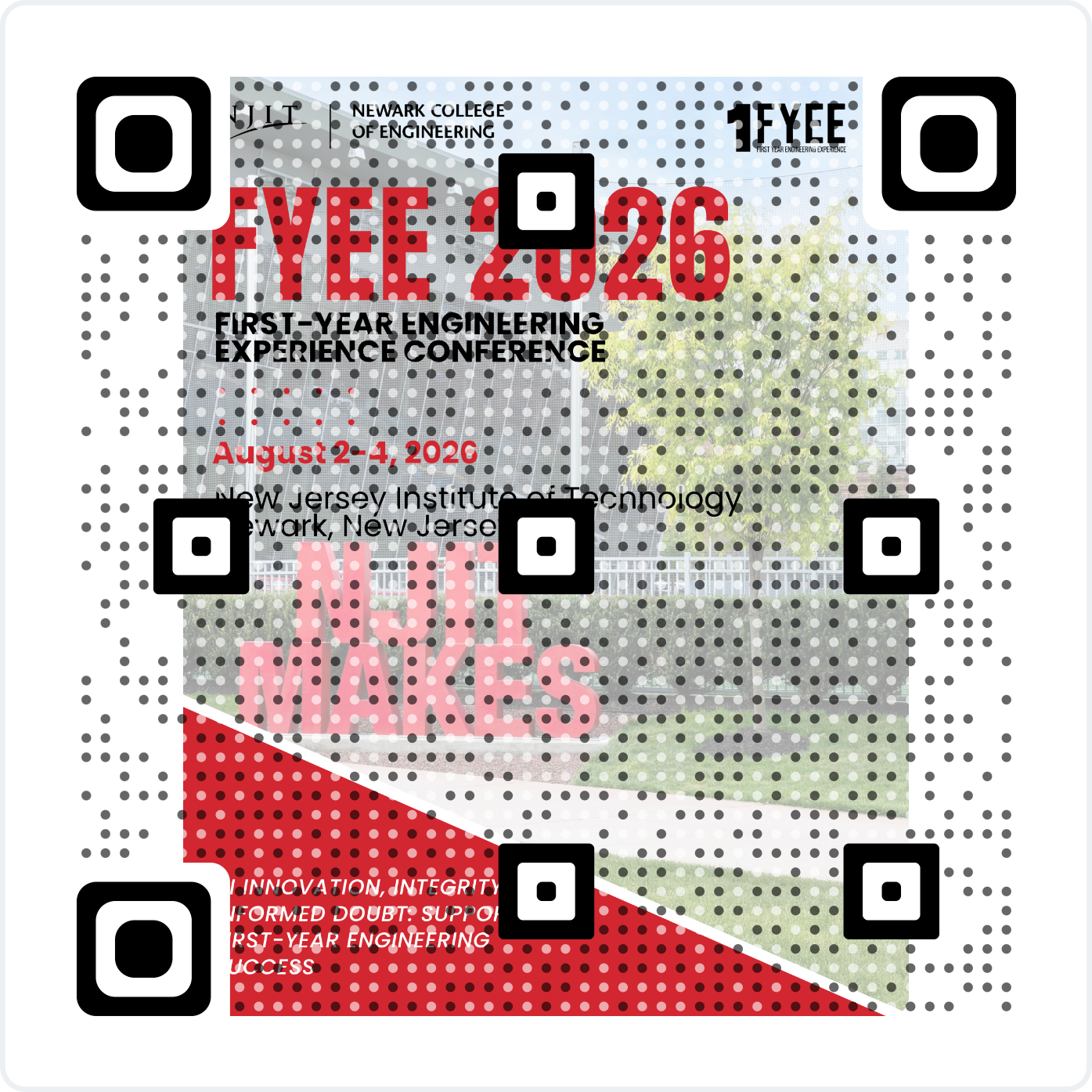
FYEE 2026 Conference Program
AI Innovation, Integrity, & Informed Doubt: Supporting First-Year Engineering Success
The First-Year Engineering Experience (FYEE) 2026 Conference invites educators, researchers, advisors, student services professionals, administrators, industry partners, and students to join a dynamic national conversation on the evolving landscape of first-year engineering education. Building on the tradition of past FYEE conferences, FYEE 2026 centers on the profound ways community and connection shape students’ early experiences in engineering.
This year’s theme—AI Innovation, Integrity, & Informed Doubt: Supporting First-Year Engineering Success—examines how AI should be best leveraged by all to broaden participation, strengthen belonging, and support student success across institutions and contexts. As first-year programs adapt to new technologies and shifting student needs, FYEE 2026 will explore how intentional collaboration can empower students from all backgrounds to thrive.

Keynote Speaker: Juan E. Gilbert, Ph.D.
Title of Talk: Preparing the next Generation of Engineers in the era of AI

Keynote Speaker: Moshe Kam, Ph.D.
Title of Talk: The Impact of NJIT’s Makerspace on the Education of Engineering Students
Conference Focus Areas
FYEE 2026 hosted by NJIT will highlight innovative strategies that harness the power of community, collaboration, and partnership—within and beyond the classroom. Featured pathways include:
Curriculum and Innovation: Novel first-year engineering curricula, reforms, and instructional strategies that strengthen learning objectives, support ABET-aligned outcomes, and introduce students to engineering thinking from day one.
Experiential and Project-Based Learning: Approaches that integrate hands-on, activity-based, design-focused, or community-engaged experiences—including service learning, entrepreneurial challenges, undergraduate research, and global or societal problem contexts.
Engineering Design, Problem Solving, and Teamwork: Courses and activities that teach the engineering design process, cultivate creative and open-ended problem solving, and explore effective models for teaming, collaboration, and assessment.
Broadening Participation and Retention: Programs and initiatives that retain students and value a wide range of lived experiences, including those experiences in engineering design, as well as empower student motivation, engagement, holistic success and thriving.
Transition, Recruitment, and Student Support: Initiatives that strengthen ecosystems of entry from K–12 to college, support transfer and bridge students, and enhance first-year outcomes through advising, tutoring, orientation, learning communities, and other co-curricular models.
Classroom Strategies and Learning Technologies: Evidence‑based teaching methods, integration of math and science foundations, peer-led learning, technical communication, and effective use of learning technologies, online tools, and computational software.
Learning Spaces and Infrastructure: Makerspaces, labs, classrooms, equipment, and shared environments that promote meaningful engagement, community building, and hands‑on learning in the first-year experience.
Engaging Program Format
FYEE 2026 hosted by NJIT will provide a vibrant platform for participants to share ideas, build professional networks, and co-create strategies that advance first-year engineering education, including:
- Workshops and interactive sessions
- Traditional and emerging-format paper presentations
- Panel discussions and facilitated conversations
- Networking opportunities and community-building events
In addition, the conference will feature special sessions, such as keynote presentations, invited panels, tours of NJIT facilities, and other unique programming designed to spark dialogue and inspire innovation.
If you have ideas for special sessions, please email us at fyeechairs@gmail.com.
Important Dates
March 17: Abstract & Proposal Deadline | May 19: Draft Deadline | July 1: Full Paper Deadline | July 1: Early Bird Registration Deadline | August 2-4: Conference |
Registration Fees
Early Bird Before 7/1 | 7/2 - 7/19 | 7/20 - onsite | |
General | $325 | $375 | $425 |
K-12 Teacher | $125 | $150 | $170 |
Student | $125 | $150 | $170 |
Questions? Contact us at nce@njit.edu.